Local-First Documents
Why Local-First PDF Workflows Save Time for Windows Teams
Why Local-First PDF Workflows Save Time for Windows Teams
If your team handles PDFs every day, you already know how quickly small tasks add up: merging files, splitting a packet, extracting pages for review, searching text, and preparing documents for internal approval. When those steps happen in browser-based tools, the workflow often slows down because files must be uploaded, processed, and downloaded again.
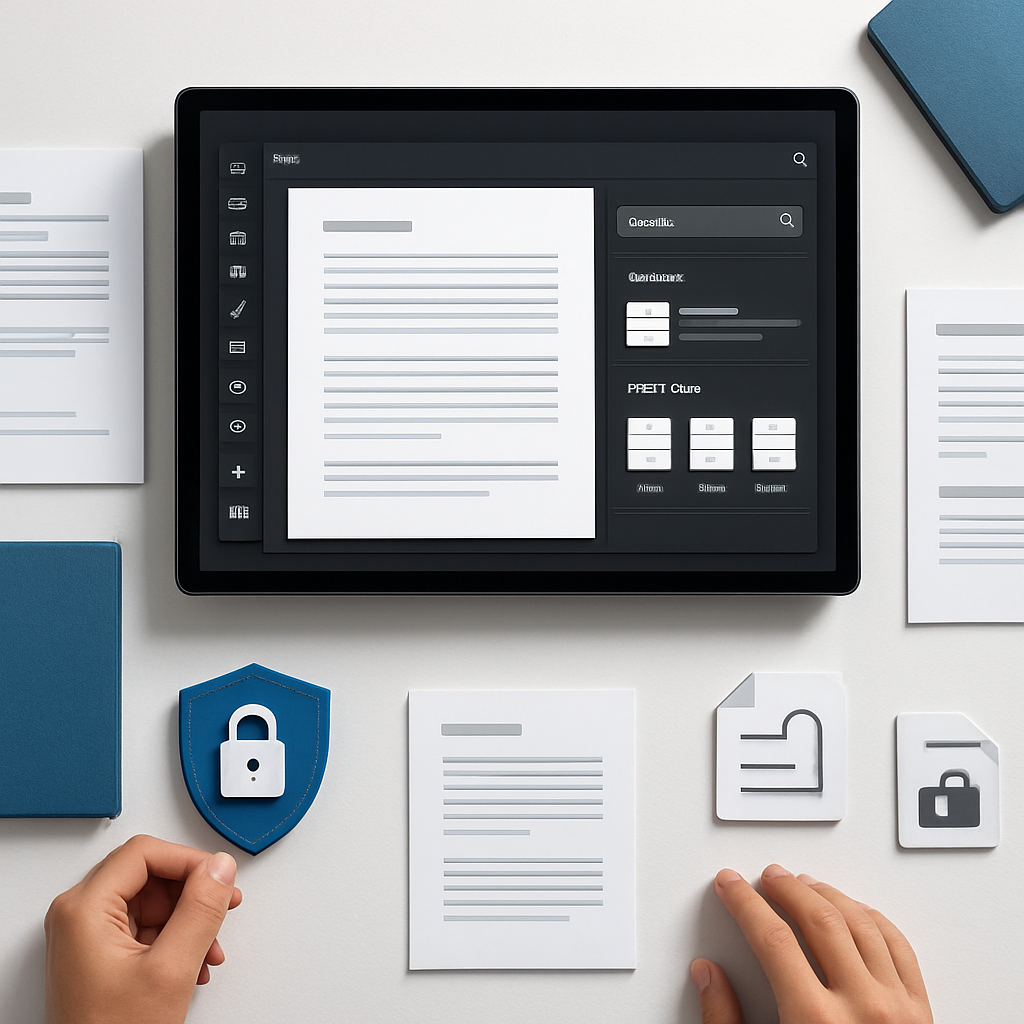
A local-first PDF workflow for Windows gives teams a more direct path. Instead of sending files through a web app for every task, the work stays on the desktop and under the user’s control. That can make PDF preparation simpler, faster, and more practical for operations teams, legal and contract teams, finance admins, consultants, small businesses, and educators.
What a local-first PDF workflow means
A local-first workflow is designed to keep document operations on your device whenever possible. In a Windows PDF app, that usually means you can:
- open PDFs locally
- search inside files without uploading them
- merge documents into one packet
- split PDFs by page range or page count
- extract selected pages for review or sharing
- prepare files for internal workflows
- keep recent files stored locally for quick access
For teams that work with sensitive or time-bound documents, this approach can reduce friction. It also helps avoid repeating the same upload-download cycle every time someone needs a small change.
Common PDF tasks that slow teams down
Many teams do not need a full document management system for every PDF task. They need reliable day-to-day tools.
1. Merging files for review or delivery
Combining several PDFs into one file is common in procurement, HR, finance, and client work. A local desktop workflow lets users bring files together and reorder them before finalizing the result.
2. Splitting large documents
Sometimes a long PDF needs to become smaller, more focused documents. Split workflows are useful when teams want to separate sections by page range, every N pages, or individual pages.
3. Extracting selected pages
When only a few pages matter, extracting them locally can save time and reduce clutter. This is especially useful for review packets, excerpts, and internal approvals.
4. Searching text in PDFs
If you regularly work with contracts, reports, forms, or manuals, fast local search can make a big difference. Instead of re-uploading a document just to find one clause or reference, a desktop reader can keep the search task close to the file.
5. Preparing documents without unnecessary sharing
For many businesses, the goal is not just to edit PDFs. It is to prepare them for the next step: review, signing, archiving, or internal distribution. Keeping that process local can feel more controlled and more efficient.
How PDF PowerKit supports this workflow
PDF PowerKit is a Windows desktop app built for local PDF work. It is designed for users who want a private, native experience for common PDF tasks.
The current workflow areas include:
- local PDF reading with zoom and navigation actions
- search panel for text lookup
- recent files stored locally
- merge PDFs with reorder controls
- split by page ranges, every N pages, or individual pages
- extract selected pages
- operation progress with cancel hooks
- local theme switching
- language options prepared for multiple markets
These features are aimed at practical productivity rather than unnecessary complexity. The goal is to help users complete routine PDF tasks efficiently on Windows.
Why teams prefer desktop-based PDF work
There are several reasons teams choose a local desktop workflow over web-only tools.
Less context switching
A desktop app keeps the task in one place. Users do not need to move between tabs, upload queues, and download folders every time they need a PDF change.
Better fit for repeated tasks
Many PDF workflows are repetitive. If you split reports, extract sections, or merge packets often, a local tool can help standardize the process.
More practical for sensitive files
Some files are simply easier to handle locally. While no system can promise perfect security, local processing can reduce the need to move documents through external services by default.
Faster for simple document operations
For common tasks like reading, searching, merging, splitting, and extracting, a focused desktop app can be a straightforward option.
When to use local workflows and when not to
Local-first tools are a strong fit for document tasks that are routine and self-contained. They are especially useful when you want to keep files on a Windows machine and avoid uploading them for every operation.
That said, some workflows may still require other systems, collaboration steps, or organizational policies. For example, advanced signature placement, true compression outcomes, OCR, and AI-related features may belong to later phases or additional tools depending on the build and product roadmap.
In other words, use the right tool for the right job. PDF PowerKit is focused on helping users prepare PDFs locally, not replacing every document system in a company.
Example workflow: from scattered PDFs to a review-ready packet
Here is a simple example of how a team might use a local-first PDF workflow on Windows:
- Open the PDFs needed for the task.
- Review each file locally.
- Use search to find the relevant section.
- Merge the selected documents into one packet.
- Reorder pages if needed.
- Split out any pages that need separate handling.
- Extract a subset for review or approval.
- Save the prepared file locally for the next step.
This kind of workflow is common in operations, client services, finance, and legal-adjacent document prep. It is not about replacing the entire business process. It is about making the PDF part smoother.
Where PDF PowerKit fits in
PDF PowerKit is aimed at users who want a Windows-native tool for local PDF workflows. It is built for quick access to everyday PDF tasks while keeping the process on the desktop.
If your current process relies on multiple web tools for simple PDF work, PDF PowerKit can help centralize the task into one local app.
Internal link suggestion
If you want a practical walkthrough of the workflow, read this related guide: Windows Local-First PDF Workflow: How to Extract Pages, Keep Bookmarks, and Prepare Files for Review Without Uploading
FAQ
### What is a local-first PDF workflow?
A local-first PDF workflow is a document process designed to keep PDF tasks on your device whenever possible, rather than uploading files to a web tool for each operation.
### Who benefits most from local PDF tools?
Windows users who work with PDFs often, especially operations teams, legal and contract teams, finance admins, consultants, small businesses, and educators, may benefit from a local desktop workflow.
### Does a local-first workflow mean cloud tools are never used?
Not necessarily. It means the default approach favors local processing. Some teams may still use cloud services for other parts of their workflow when appropriate.
### Can PDF PowerKit replace every PDF or signing tool?
No. PDF PowerKit is focused on local PDF productivity tasks. It can support preparation workflows, but it is not positioned as a replacement for every specialist tool or process.
### Is PDF PowerKit a legal tool?
No. It is not legal advice and should not be used as a substitute for legal review. It is a productivity tool for preparing PDFs locally.
Final takeaway
If your team spends too much time uploading PDFs just to merge, split, extract, or search them, a local-first approach can make the work more efficient. For Windows users who want practical, private, desktop-based PDF handling, PDF PowerKit offers a focused way to prepare documents locally.